Community
Cultivating the We
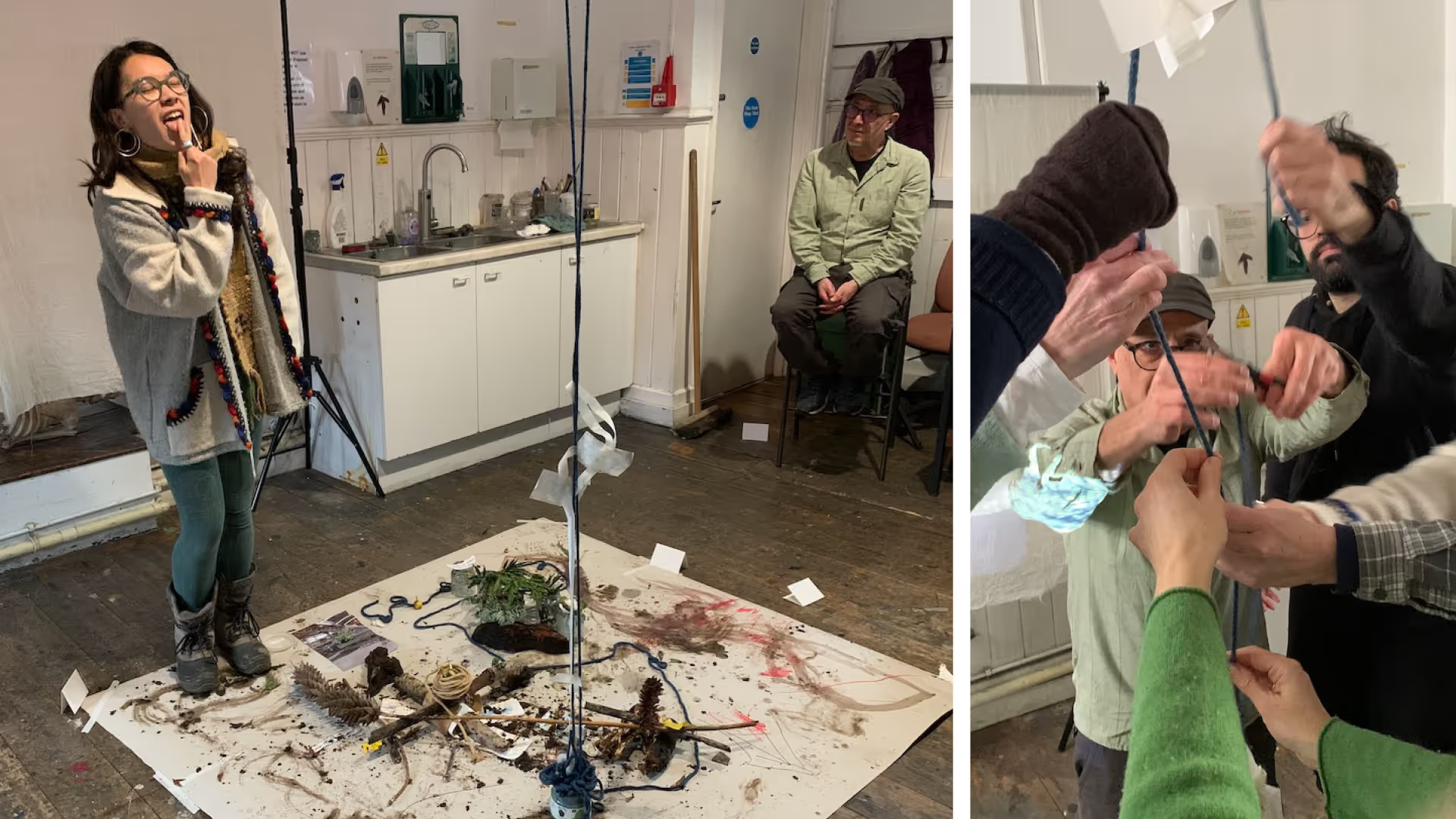
On a stormy Friday at the end of January ten of us gathered at The Mansion in Totnes for an experimental workshop to participate in collective making (and destroying and then rebuilding, as it turned out), prompted by a dérive.
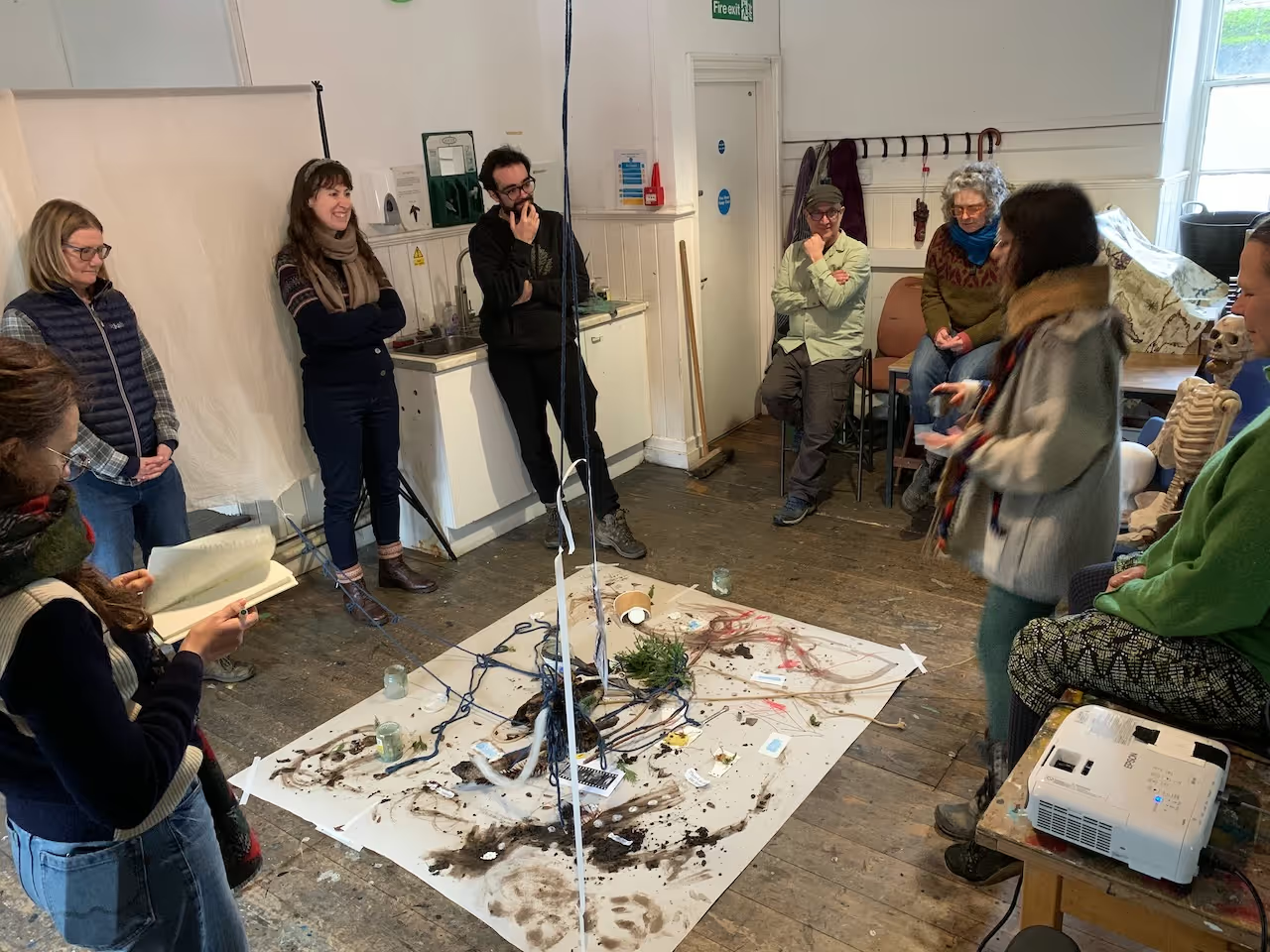
The idea of "Cultivating the We" is to sense solidarity and agency through a process of creative collectiveness. It grew from the spirit of the free Creative Meet-ups we have hosted to date - gentle opportunities to slow down, notice, explore and share individual artistic practice around relationship to place. The Meet-ups, in turn, were informed by the emergence of The Saltmarsh Artist Collective, 6 artists participating in an ecosystem restoration project over 3 years. We were curious to see what might happen if, next, we set up the conditions for live situations that would strengthen and increase collective creativity. Situations that might also have the potential to become a valid form of bioregional learning. From there, artist and collaborator Emilio Mula built a workshop experience around a dérive - because it had to start with noticing.
The concept of the dérive was developed by members of the Situationists, first publicly theorized in Guy Debord's Theory of the Dérive in 1956. Debord defined the dérive as "a mode of experimental behaviour linked to the conditions of urban society: a technique of rapid passage through varied ambiances". A dérive can lead to any number of "Situations" as immersive moments. More than a combination of circumstances, conditions, or surroundings affecting a person or place at a specific time, the Situation was seen as a tool for the liberation of everyday life, a method of negating pervasive alienation. Debord also coined the term 'psychogeography' to describe the interaction between a geographical environment and people's emotional life.
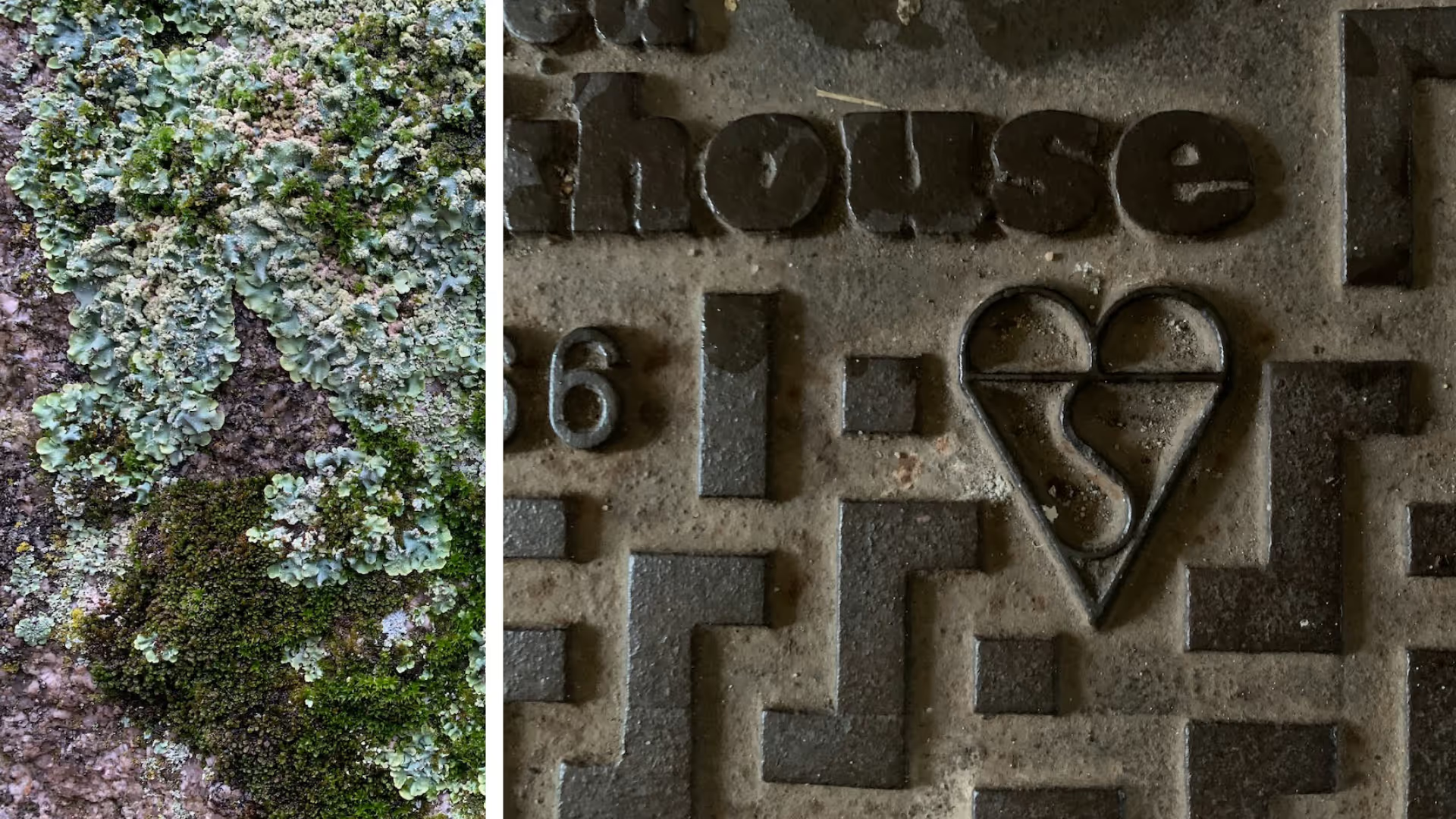
Our version of the dérive was the first activity of the day - ten of us meandering, or drifting, through Totnes, all noticing very different things. As I stepped into a café packed with people avoiding the rain I noticed the the steamed up windows and the sudden change of noise level from the street to the interior. I recorded the hubbub of voices with my phone, and found myself thinking, "what happens when I replace this experience, this aliveness, with a recording of it, or an image?"
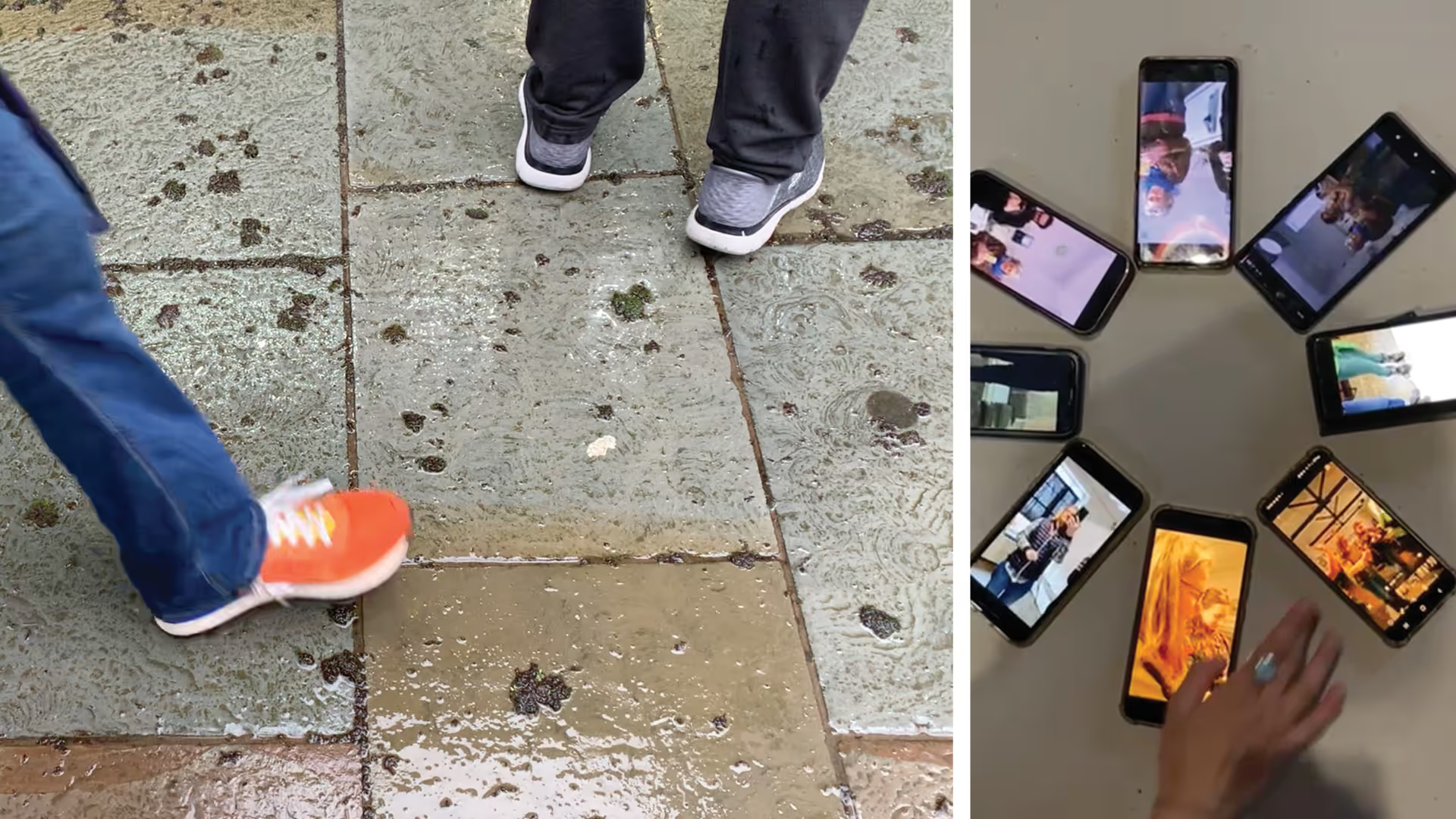
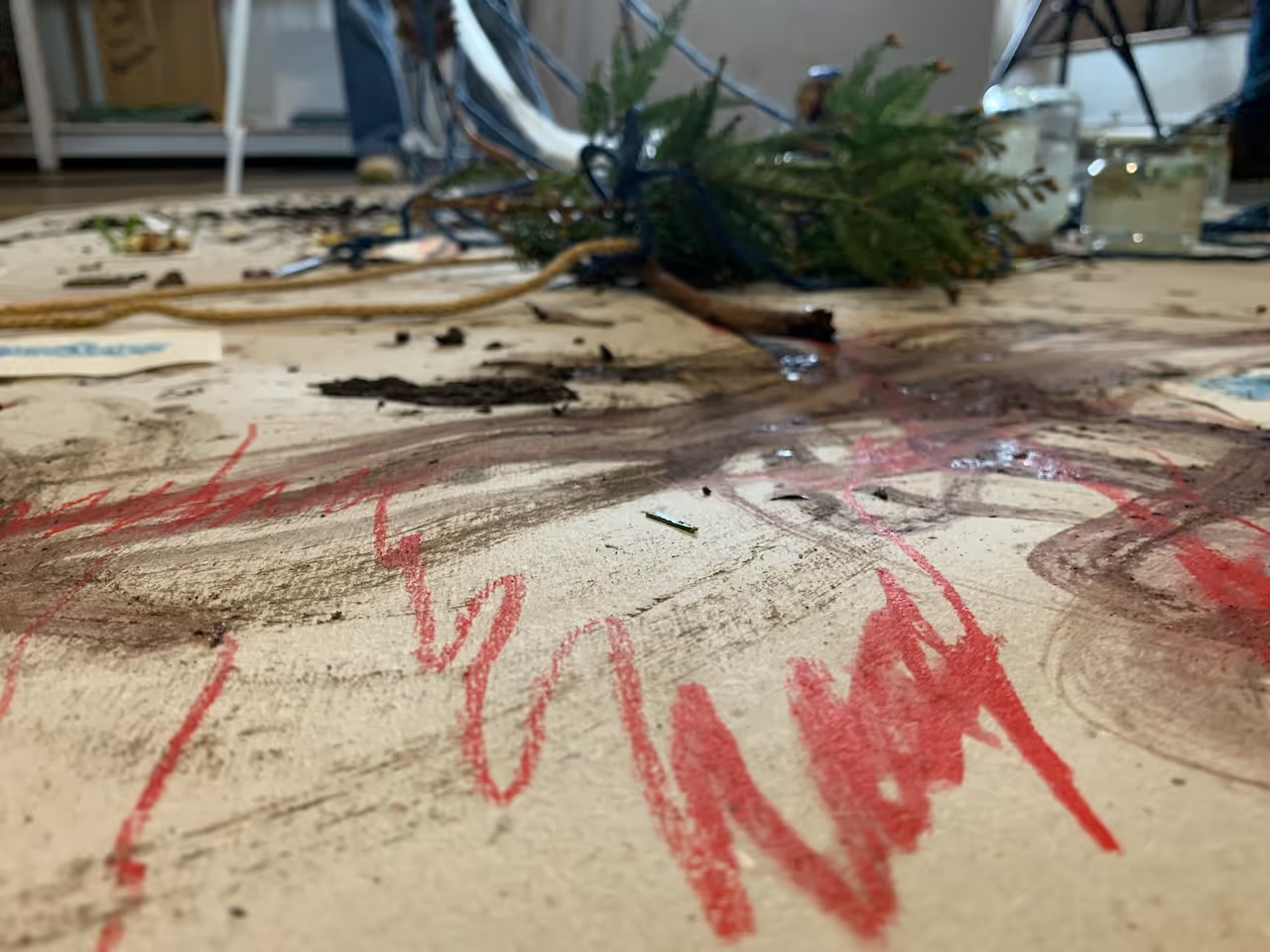
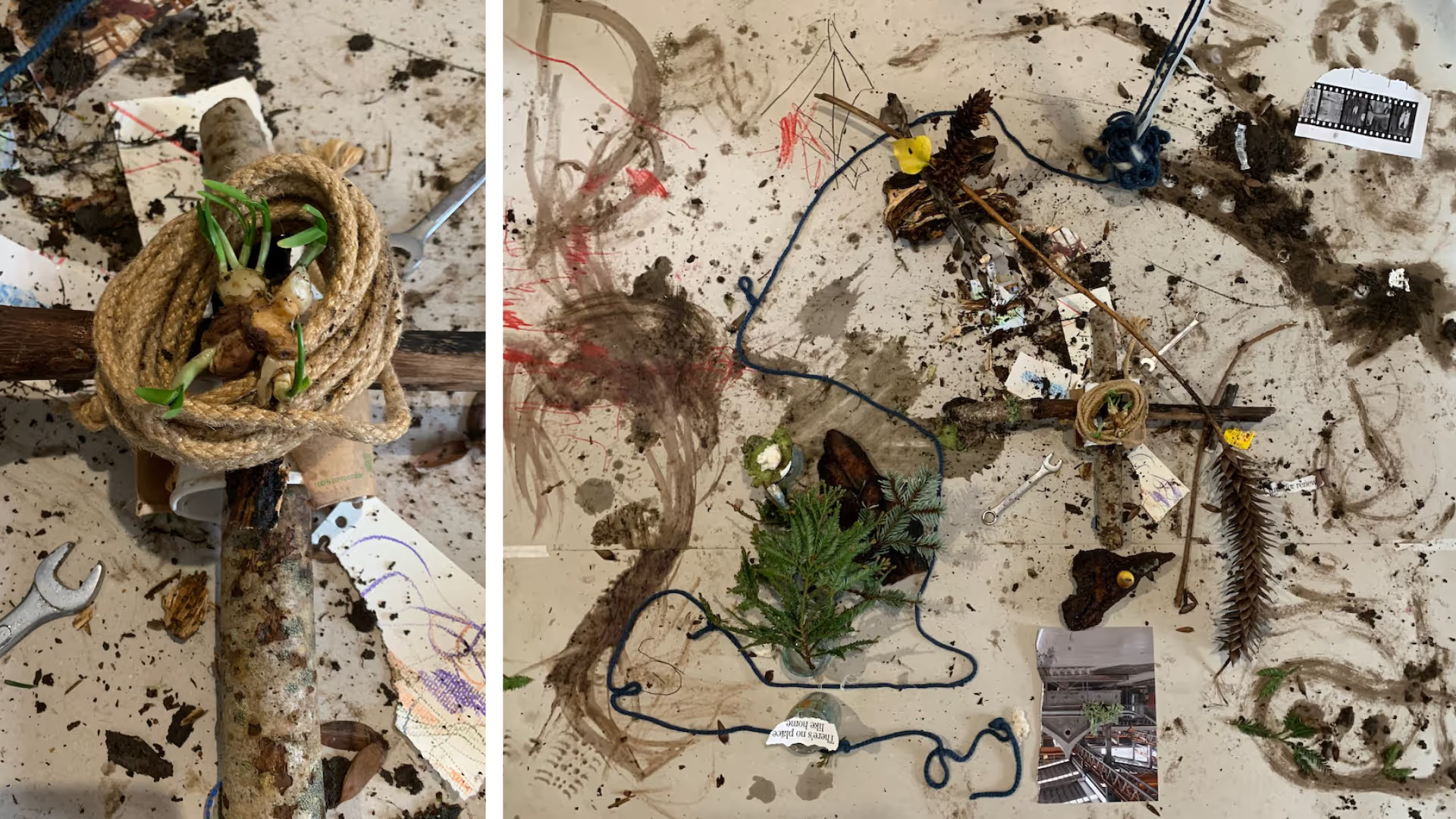
The workshop is a core activity in our Sensing the Bioregion practice, an iterative process to actively cultivate deeper understanding and awareness of self, other, place and time. We gathered back in the Art Room and shared our adventures over lunch, then simulated the experience of noticing using our phones to reinforce the concept of our different 'presents', each with its own potential (just like different possible futures). Then began an intense period of co-creating a "piece" using things we had collected, improvising, negotiating, seeing what was missing, like mud or colour, finding and adding it. We noted the sense of being done, of 'enough' and reflected on what we had made together - we owned the mess. The process had seemed to take only a few minutes. What followed, inexplicably, was a period of destruction, everything pushed to the middle, entangled. It felt like the only choice then was to regenerate. Structures appeared. "Islands of Coherence", someone said.
The last part of the workshop was an invitation to step into the "piece" to speak to the systems, forces and pressures at work all around us. Bringing in these forces (as folded cards placed at any distance from the piece) brought a heaviness that was palpable in the room, but each of us chose a force and spoke. Somehow we had grown a bit in our capacity for agency. We collected up the remains of the piece in our arms as if to give us strength to shift that which needs to be shifted.
"Bioregionalism is a kind of creative branch of the anarchist and on the other side the creative branch of the environmental movement that strives to re-achieve indigeneity by learning about the place, what really goes on there."
Gary Snyder from a conversation with John Loeffler
As a small group, we had stretched ourselves from absorbers to anarchists to relating ourselves to something bigger. We had reached a similar level of awareness, so cross-checking different impressions of the experience might indeed make it possible to arrive at objective and revealing observations (Debord had come to this conclusion back in the 50s). We became ready, as a group, to "find the edges", to be "collectively weird" and share our reflections - here are some from the dérive:
"...as soon as you see something it becomes an influence", "intentionality is a narrowing force, a material contract", "the town feels quite specific to my body", "I began to notice the sequences of actions taking place", "I recognised where I was feeling resistance", "sound works on me in a different way to seeing", "when I stopped to look I was bumped into", "I am alone as an artist, I want to experience aliveness as part of a bigger body...".
In this work, here is one question we are asking: from a position of collective creative energy informed by art practice, can we develop the agency to form a different relationship with forces and systems? What could that energy generate if we loosen the grip on destination and impact (except in the case of climate science)? In the context of 'falling together' (the meaning of the word 'collapse'), rethinking the construct of community engagement, or strategies like The Green Competencies, for example?
'Cultivating the We' feels necessary and foundational. This much I know.
"Landscape is unobtainable... when you draw with lines it's like they carry a current... when you journey through the plane of the paper, things are revealed, but you never really get to where you're going" - artist, Beth Heaney
We'll post upcoming workshops here. The next workshop is in Buckfastleigh at the Moor Imagination Centre if you fancy a drift. Our plan is to create a montage of these moments of lived experience across the bioregion.